

The challenge
TB remains preventable and curable, yet one in four people with TB remains undiagnosed. Early detection is essential to stop transmission, but screening methods such as chest X-ray and molecular testing are difficult to scale, and many people with TB do not report symptoms. Accessible and scalable screening solutions are urgently needed, especially in communities and populations where TB is often undetected.
Our approach
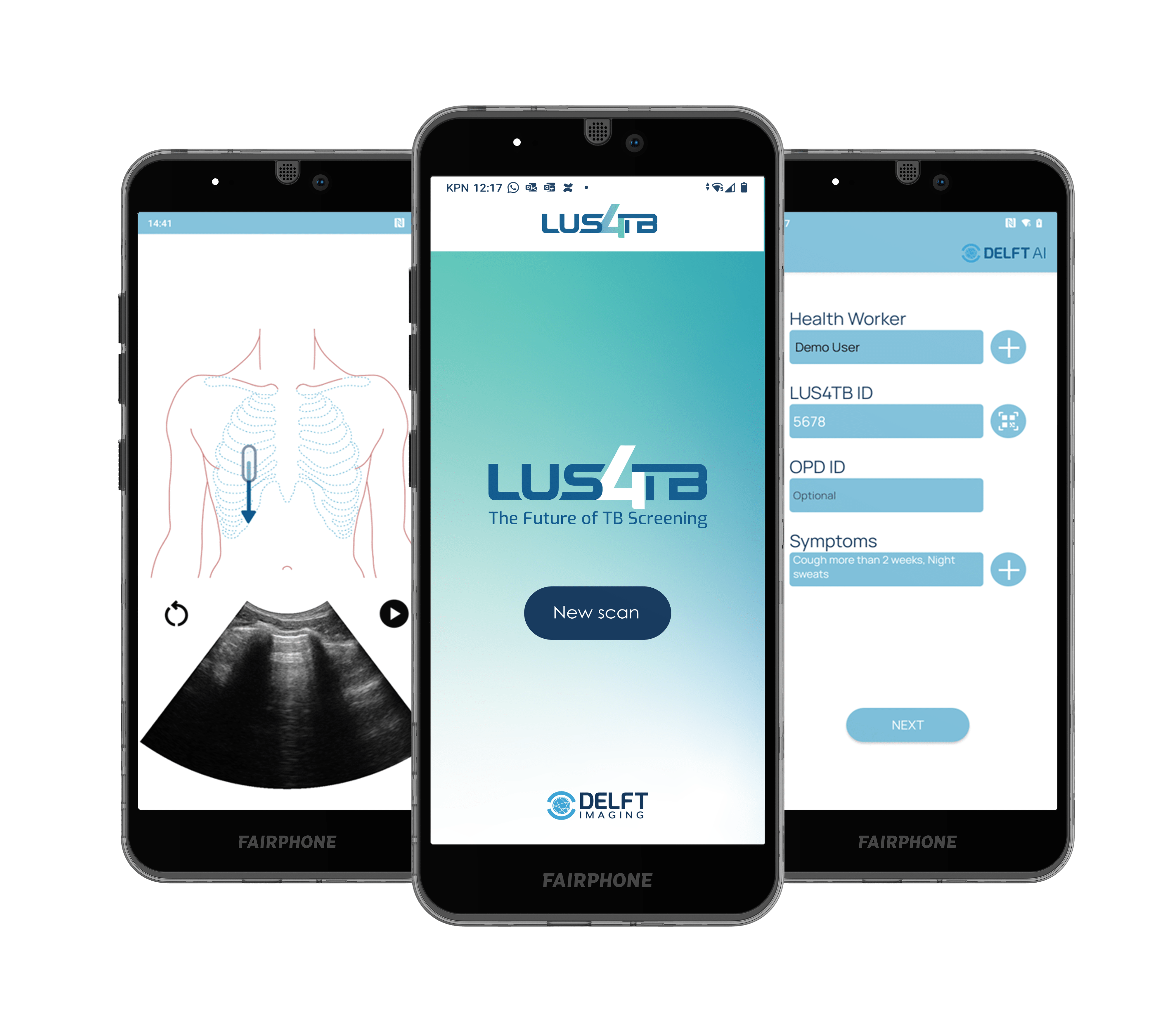
LUS4TB is a point-of-care ultrasound (POCUS) that addresses this gap. It is portable, radiation-free, suitable for bedside use, and potentially cost-effective. Currently in development, it is a mobile application that connects to a handheld ultrasound probe and guides users through a standardized lung-scanning protocol.
The integrated AI model analyzes the images offline on the device and rapidly outputs the likelihood of TB. This approach enables TB screening to be performed by non-experts, expanding access to early detection in settings where specialized staff and resources are limited. In testing on unseen data, our model achieved:
- AUROC: 0.97 for detecting lung-abnormalities
- 90% sensitivity at 70% specificity for detecting TB
Broader potential
The same AI–ultrasound approach can also support the detection of pneumonia – another major global health burden. Although lung ultrasound is already a proven method for diagnosing pneumonia, expertise barriers limit widespread use. We are currently adapting our standardized protocol and lung-abnormality AI model for pneumonia detection.
Where to use
This AI-enabled POCUS solution complements lung-disease screening in both high-burden TB regions and primary healthcare settings globally.