With over 739,000 estimated TB cases in 2023 and more than 37,000 deaths, the Philippines faces one of the highest tuberculosis burdens in the world. Drug-resistant TB remains a serious concern, with 29,000 people estimated to be affected. Despite these challenges, significant strides have been made in identifying and addressing gaps in diagnosis; over 163,000 people previously missing from care were identified in 2023.
In response to this urgent need, we partnered with FIND and the International Organization for Migration (IOM) in 2018 to deploy the nation’s first CAD4TB, utilizing AI to aid in detecting TB-related abnormalities in chest X-rays. This commitment expanded in 2021, when they deployed 8 CAD4TB to support eight additional sites as part of the iNTP project, funded by USAID and supported by the Stop TB Partnership. In 2022, we provided an additional CAD4TB to Medecins Sans Frontieres (MSF).
Making a difference
Research paper
In a study published and presented during the Union World Conference on Lung Health in 2015, CAD4TB was utilised in the Palawan provincial areas of the Philippines. The study then used CAD4TB 4 (an older version of CAD4TB than what is currently available), and the software achieved a sensitivity of 90% and a specificity of 80%. The study concluded that computerised reading (artificial intelligence) provides high sensitivity and specificity and may assist human readers in active case-finding programs, thus improving screening throughput.
In a study published in 2019, researchers looked at automated chest X-ray readings for tuberculosis in the Philippines to improve case detection. The study examined 10,755 individuals, of which 2,534 had a positively assessed chest X-ray and 298 Xpert-positive cases. The publication noted that based on the radiological reference, the physician performed slightly worse than the CAD4TB software, although it was not found to be statistically significant at that time. The study concluded that the performance of automated chest X-ray reading is comparable to that of attending physicians, and its use as a second reader could increase TB case detection. Note that the study used an older version of CAD4TB than currently available.
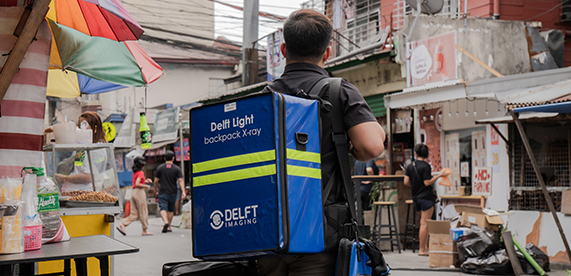
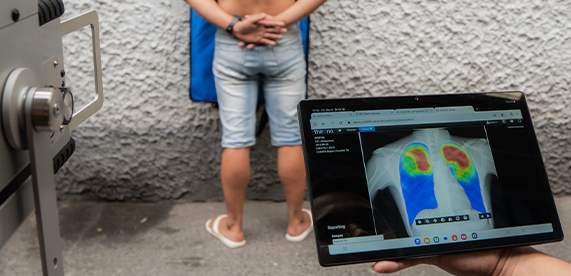
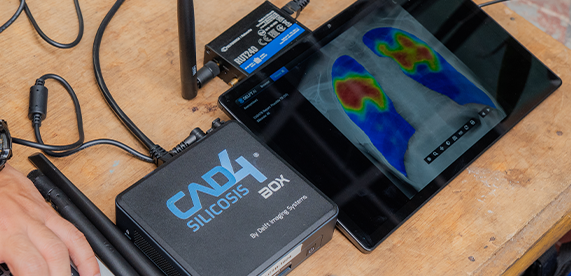
The 2023 USAID report highlights the use of CAD4TB software, an AI-powered tool, integrated with ultra-portable digital X-ray systems to boosts TB screening in remote areas of Philippines. CAD4TB’s application significantly improved the efficiency of diagnosing TB by rapidly analyzing chest X-rays to detect abnormalities that may indicate the presence of TB. This technology, coupled with the ultra-portable nature of the X-ray equipment, facilitated quick and accurate TB screenings, reducing the typical result turnaround time from three days to a mere 2-3 minutes. This capability proved crucial in increasing access to TB diagnostic services for geographically isolated and disadvantaged communities, streamlining the detection process and enabling prompt initiation of preventive treatment where necessary.
In 2024, a TB screening initiative in the Philippines uses X-ray systems equipped with CAD4TB to TB screening closer to the people, improving early detection and treatment. Read more here.
Same year (2024), a new case study by the Stop TB Partnership highlights the use of Fujifilm Xair and CAD4TB in the Philippines for the iNTP program. This initiative demonstrates improved TB screening and diagnosis through advanced technology. Read the full case study here.
Same year, a study was conducted across the Philippines, Vietnam, South Africa, Uganda, and India to assess the diagnostic accuracy of CAD4TB version 7 in primary healthcare settings. The findings demonstrated that CAD4TBv7 achieved an area under the curve (AUC) of 0.90, comparable to expert radiologists, and met WHO’s target product profile criteria for a TB triage test.
Press coverage
Médecins Sans Frontières (MSF) in 2025 released an article about its efforts in Tondo, Manila, one of the most densely populated areas in the world, where it is using artificial intelligence to improve tuberculosis detection. By leveraging CAD4TB for AI-assisted chest X-ray analysis, MSF teams are identifying TB cases earlier, even among asymptomatic individuals, helping to reduce transmission and improve patient outcomes. This initiative highlights how scalable technology, combined with strong community engagement, can enhance healthcare delivery in underserved settings.